|
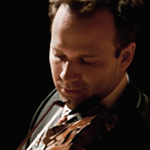
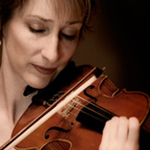
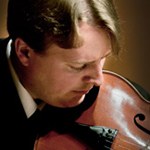
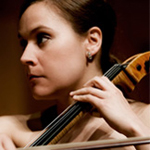
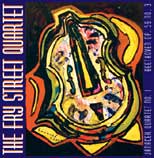
For Fry Street Quartet's debut
CD, the members
of the quartet chose to record
the Beethoven String Quartet in C major Op. 59
No. 3, and Leos Janacek's String Quartet
No. 1, after Tolstoy: The Kreutzer
Sonata (1923).
A giant undertaking, considering we had
only four days in the studio, Fry Street Quartet was
well prepared as usual. The two pieces were part of
their Carnegie Hall debut concert in November of
2000. Our sessions were booked for August 6, 7, 8,
and 9, 2001, at the Carriage
House Studios in Stamford, CT.
Jon Altschiller of 'chillersound,
New York, was chief engineer. For microphones, Jon
chose Neumann 87s for the violins, an Elam
Telefunken 251 for the viola, and a Lawson for the
cello. We recorded on Pro Tools with an SSL board
and analog backup.
We decided to record the Beethoven
first. We began by recording short sections, with
contrasting dynamics, and then listening back
together in the control room. This enabled us to
decide as a team whether subtle corrections in
balances would best be made by moving microphones or
by adjustments from the players. The basic strategy
was to get as many complete takes of whole movements
as reasonably possible each day. Rather than take up
studio time with a lot of listening, we made jukebox
mixes at the end of each session and took them back
to Bogmoor each evening for
review. In this manner we could determine what we
had and what we had to do over. It was a
highly focused and intense four days.
We were quite fussy about tempos and
about intonation. Borderline intonation was not
tolerated. We were all in agreement that weak
intonation simply spoils everything immediately. As
an aside, I will say that many well-known string
quartets apparently assume their intonation
is adequate, when in fact it isn't. Both the
Beethoven and the Janacek have particularly
challenging sections in terms of intonation,
especially where two instruments are in unison or in
octaves. One of Fry Street Quartet's goals is to be
the most "in tune" string quartet on the
concert stage, as well as on recordings.
I am particularly proud of the
majestically slow tempo of the first movement
chorale in the Beethoven as contrasted with the
lightning fast fugue in the last movement. Fry
Street Quartet's sense of ensemble and feeling of
"oneness" in interpretation, along with
their awesome dynamics, are defining qualities of
the group that make them stand out on the world
stage.
Janacek's first string quartet is a
complex piece. Anyone perusing this score for the
first time will find a bewildering array of musical
markings, tempo changes, complex rhythms, arcane
interpretive directions, and fiendish, anti-string
key signatures. The Janacek, however, has become a
signature piece for the Fry Street Quartet. They
play it with the passion and confidence of
interpretation necessary for a convincing
performance. The piece jumps to life in their hands.
I believe part of the reason for the life-giving
resonance they bring to this piece is that each
individual player has a deeply felt connection, a
private feeling about what the piece is about. The
Janacek allows each player moments of individual
expression and each of the Fry Street Quartet
players rises to the occasion brilliantly. At the
same time Fry Street Quartet are able to bring a
consummate ensemble to the piece as a whole. Note in
particular the wonderful growls and howling
overtones achieved in the third movement. This was a
magnificent and startling moment in the studio.
After an interval of reflection on the
rough mixes—about two weeks—final mixing
sessions took place at 'chillersound, Jon
Altschiller's perfectly equipped studio in New York.
Mr. Altschiller's engineering prowess and
production skills together with his excellent ears
and memory were an invaluable asset to the entire
project.
Working with the Fry Street Quartet on
this project was a pleasure and a privilege. A world
class string quartet is emerging from these young,
gifted, and above all, musical artists.
—T. McFaul
|